IP, Culture, and Technology — Reflections on 2025 and the IP Universe Ahead
Table of Contents
1. Introduction | New Year’s Greetings
Happy New Year.
I would like to express my sincere gratitude to everyone who has followed my work and activities, and to those who have engaged with me through projects, dialogue, and shared exploration.
As I look back on 2025, I want to take this moment to articulate—clearly and honestly—what I have been thinking about, what I have been putting into practice as aratama 璞, and what kind of future I am beginning to see for 2026.
I look forward to continuing this journey together in the year ahead.
2. The Core Philosophy of aratama 璞
Over the years, I have worked with generative AI as a form of expression—through creative production, IP development, and the operation of media and platforms.
Throughout all of this, my focus has never been technology itself, but the relationships it creates with people, and the culture that gradually emerges within those spaces.
While AI has triggered an explosive increase in information and expression, what I now sense most strongly is a rapid dilution of density and responsibility.
We have entered an era where anyone can produce highly polished output in a short time, allowing expressions that lack sufficient context or philosophy to circulate unchecked.
As a result, the questions, emotions, and subtle discomforts that once lived at the core of expression are becoming harder to perceive.
Expression, by nature, accumulates a creator’s stance and responsibility over time—through thinking, hesitation, and repeated judgment.
Yet today, the speed of output often overwhelms this process, leaving us with a flood of quantity detached from intention.
The question of why something should be expressed frequently fails to catch up.
The phase in which “because AI made it” could function as an excuse to postpone judgment or responsibility is already coming to an end.
What will increasingly be questioned is not whether AI was used, but who chose that expression—and who released it into society.
This is why I see IP not as mere characters or content, but as entities that contain philosophy, questions, and responsibility for judgment.
Through IP, expression is no longer a series of fragmented outputs; it is placed within a continuous worldview, accumulating meaning over time.
Culture acts as the medium that connects people to one another, and people to technology.
By sharing values and moments of discomfort that cannot be resolved by technology alone—through lived cultural contexts—expression can finally take root in society.
IP, culture, and technology.
By moving back and forth between these three, I seek to deepen forms of expression and relationships in which humans and AI mutually expand one another.
To cultivate spaces where resonance emerges, where dialogue and experimentation are possible, and to step into territories no one has yet explored.
That is the axis from which I continue to work.
Independent IPs with their own philosophies and aesthetics gather, presenting new relationships between people and technology through culture.
This statement serves both as a declaration of worldview for my creative work and projects, and as a guiding principle for decision-making. Here, I would like to clarify what I mean by “IP,” “culture,” and “technology.”
What Is IP — An Entity That Contains Philosophy, Time, and Accumulated Practice
IP (intellectual property) is not simply a collection of characters or legal rights. For me, IP is an entity that inherits the thoughts, emotions, time, and accumulated practice of those who came before.
Because traces of trial, error, failure, and challenge are passed down as context, IP does not remain a transient expression—it continues to live across time.
I see IP not as a finished product, but as a living structure in which philosophy and aesthetics are continuously accumulated and renewed.
What Is Culture — A Living Organism That Breathes
Culture cannot be defined solely by rules or language. It possesses a quiet force that guides human behavior and choice as a dense convergence of values, emotions, and atmosphere.
I perceive culture as a living organism—one that seems to breathe within the space itself.
Even when we cannot explain why, we feel drawn to it, at ease, excited, or unsettled.
That sensation, to me, is the true nature of culture.
As this sense of life deepens, a space transcends mere function or service and becomes a brand that people engage with voluntarily, empathize with, and act within.
Culture, for me, is the soil that naturally connects IP and people, sustaining long-term relationships.
Engaging with Technology — Design Philosophy for an Era Where AI Expands Humanity
The evolution of technology—AI in particular—has accelerated far beyond even the internet era. Concepts such as singularity and AGI no longer feel abstract; they are approaching a tangible distance.
In an era where AI creates AI, what matters most is not what we make, but how we design, govern, and embed philosophy and ethics into these systems.
This question extends beyond technical judgment to the deeper issue of how we shape humanity itself.
For this reason, those who use AI must continuously update their literacy.
Not out of fear or restriction, but because AI also holds the potential to support humans—vastly expanding the range of thought, expression, and judgment.
By consciously designing the boundaries of responsibility and decision-making that humans must retain, AI can become not something that erodes humanity, but a partner that expands creativity and imagination.
That possibility fills me with both hope and excitement.
A Philosophy of Circulation Between the Three
IP, culture, and technology are independent, yet they do not possess fixed roles. They overlap, influence one another, and continuously renew their relationships depending on context.
By circulating between these three—deepening expression, nurturing relationships where humans and AI expand one another, and cultivating spaces of resonance and experimentation—this philosophy forms the foundation of all my activities, from creative production and the construction of the IP Universe to AI Creators and beyond.
3. What Was Realized in 2025 | Concrete Implementation of the IP Universe
In 2025, the IP Universe—long held as a conceptual vision—began to take tangible form through repeated experiments, releases, and challenges. Here, I want to look back on my expressive work as aratama 璞, as well as the initiatives focused on building platforms and spaces.
3-1. IP as Artistic Expression — Works as an AI Artist
In my work as an AI artist, I have consistently approached IP not as isolated characters or visuals, but as entities that embody philosophy and worldview.
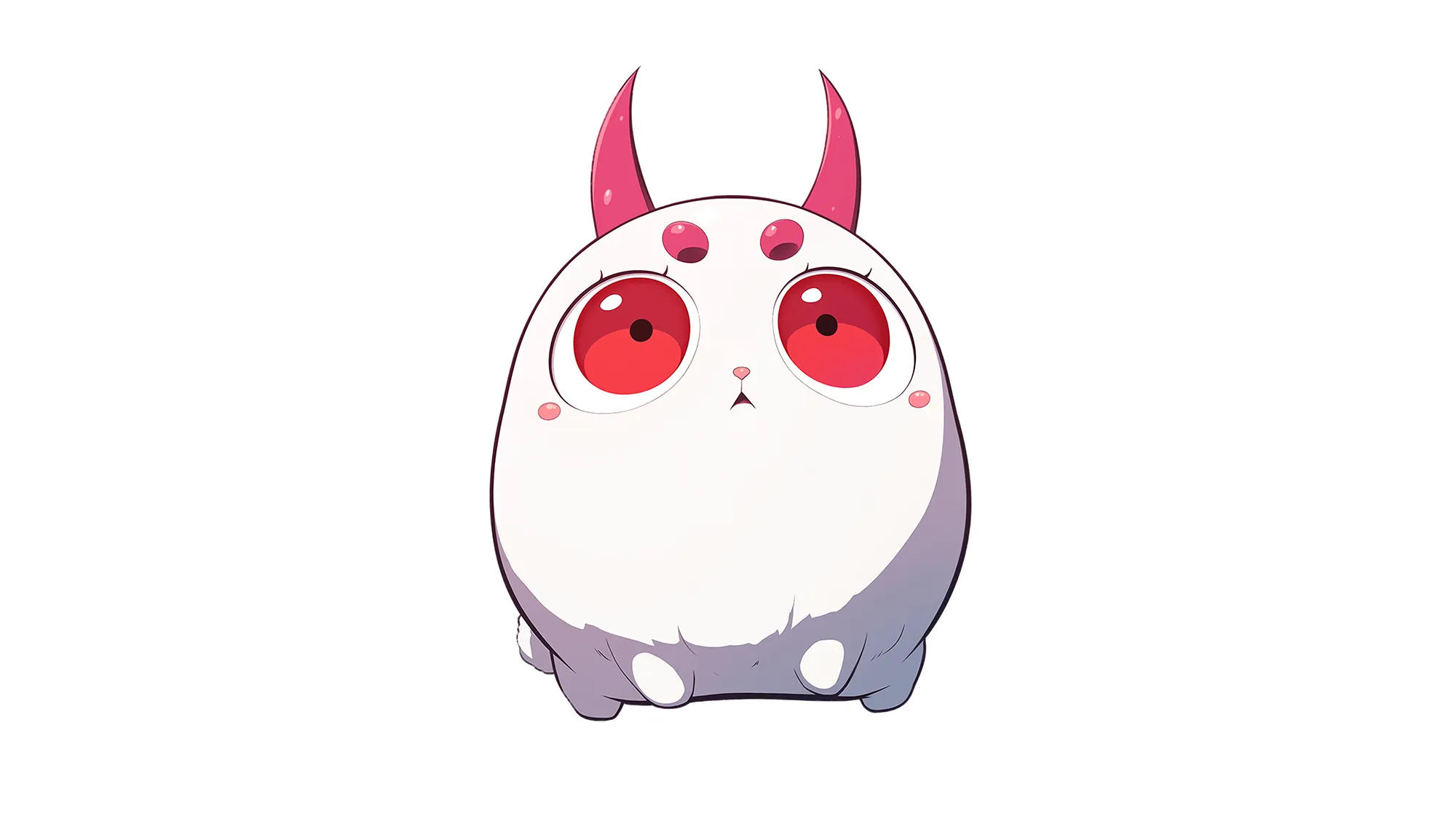
- YōuMo 妖萌
- AratamaKōgyō 璞工業
- tamarqü Virtual Human
In 2025, the following IPs were released as part of the IP Universe. Each carries its own aesthetic sensibility and set of questions, while coexisting within a shared worldview.
aratama IPs:https://aratama.io/ip/
Through participation in international AI contests, film festivals, and exhibitions, I also worked to connect AI expression to broader cultural contexts. Engaging with participants and guests helped me locate my current position more clearly—and expand the circle of people I can build with.
- Submission to Runway’s “Gen:48 – Fourth Edition”
- AI music video “Inner Elevator” selected as No.1 on 5ives.ai
- Participation as an AI creator on Escape.ai
- Exhibition at the global AI animation festival “genAIme [ esc ] fest 2025”
- Finalist in Japan Columbia’s AI creative contest “COLOTEK”
- Exhibition at “Generative AI Anything Exhibition Vol.4”
Beyond video expression, I also ventured into the picture book format. The original picture book “Papapa” (released via TamagoDaruma, with a print edition planned).
By using AI expression while creating an experience that can be shared by children and families, I am exploring how IP can function across generations and contexts.
3-2. AI Creators | Building an IP Platform as a Medium
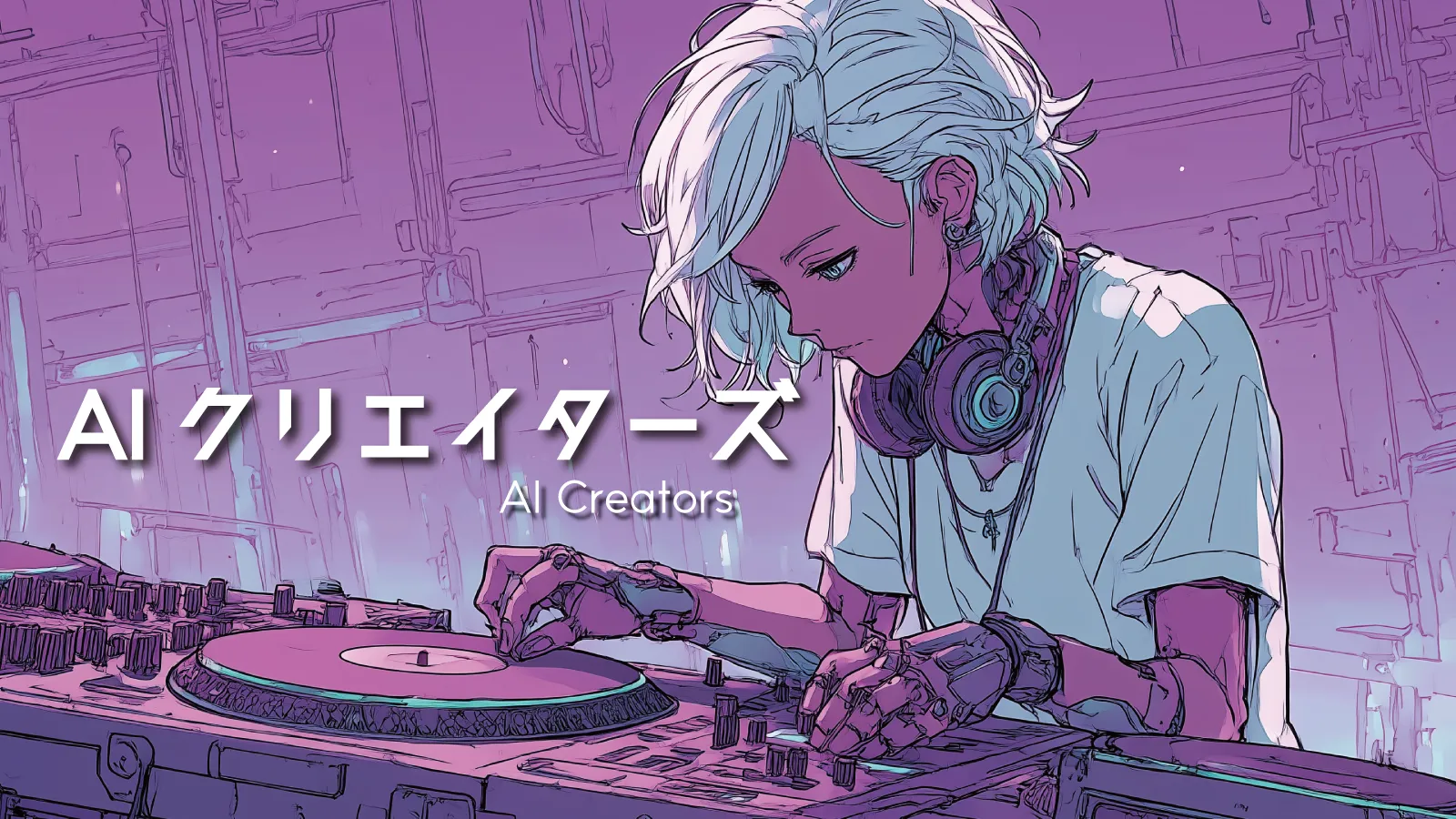
I also focused on building platforms through AI Creators.
In March 2025, I launched and began operating AI Creators Media (EN/JP), sharing insights from the frontlines of generative AI and creative practice.
This initiative goes beyond information distribution—it functions as a medium that connects AI creators with companies and projects.
- Client work in the AI creative domain
- Verification, design, and custom development of generative AI workflows
- Involvement as a producer
- Assignment of AI creators
- Team formation and collaborative production design
By moving back and forth between individual expression and team-based production, experimentation and real-world execution, I have been exploring production structures and role distributions that feel native to the AI era. While there are still gaps in experience and many areas to refine, I intend to continue building steadily—step by step.
3-3. Building IP Platforms in Other Fields
- A Japanese traditional crafts co-creation platform connecting artisans, companies, and the world
- Experience design to deepen engagement with art fairs and festivals
- A life-stage media platform that observes every phase of growth from birth onward
The concept of the IP Universe is not limited to the AI creative domain. In 2025, I launched and operated multiple platforms across different fields, utilizing AI along the way.
In June 2025, I launched “Kogei Japonica,” a Japanese traditional crafts co-creation platform connecting artisans, companies, and global audiences.
Centered around a bilingual media platform, this initiative aims to bridge the context of traditional crafts with contemporary technology and business.
I also worked on the development and operation of the japan ART EX app (EN/JP), designed for art fairs and festivals.
By expanding the viewing experience and enabling visitors to engage with art more actively, I explored ways in which technology can support culture.
Additionally, I continued year-round operation of the life-stage media platform “TamagoDaruma,” which observes all phases of human growth.
As a media platform that leverages AI to align with human emotion and life rhythms, it explores how IP can function over extended time horizons.
4. Reflection and Unresolved Questions
2025 was a year of accumulated practice and challenge.
At the same time, alongside a sense of progress, unresolved questions and structural issues that require improvement became increasingly visible.
Supporting AI Creators
Through AI Creators, opportunities to encounter diverse talents and perspectives have certainly increased. Yet we have not fully built an environment where each creator can grow sustainably, experiment with peace of mind, and continue without burning out. In the educational domain as well, efforts remain focused on curriculum development, without yet completing a cycle where learning feeds into practice—and practice feeds back into relationships.
Beyond providing tools or work opportunities, we need to design support systems with greater care—especially communication spaces where concerns, values, and perspectives can be shared.
Engaging with Art and Artistic Contexts
While I have pursued connections between technology and expression, meaningful dialogue with existing art contexts, histories, and the time accumulated by artists remains insufficient. Holding space for new possibilities while respecting historical continuity is not simple, but it is a crucial theme that demands deeper engagement going forward.
Balancing Speed and Depth
AI has dramatically accelerated implementation and verification. At the same time, there were moments when I lacked the margin to pause, reflect, and deepen the meaning of what was being made. As expectations for quality continue to rise, I recognize that I did not always succeed in selecting, prioritizing, and focusing.
In an era where speed itself can become value, cultivating judgment—knowing when to accelerate and when to slow down—becomes essential.
Unaddressed Missions
Full-scale engagement with video media and deeper growth of the IP Universe itself remain unfinished. While IPs and worldviews have been introduced, the processes by which they grow within people—and expand as relationships—have not yet been fully designed or observed.
These reflections and questions are not reasons to stop, but necessary steps for moving forward.
Answers will not come immediately, but continuing to experiment while holding these challenges is, I believe, an essential process for growing the IP Universe.
How far this unfinished state can be advanced in 2026—that is the next mission.
5. What Came Into View Beyond 2025, and Toward 2026
What Is Being Questioned as AI Becomes “Ordinary”
What struck me most throughout 2025 was the shift of AI from something extraordinary to something increasingly invisible—technology used without conscious awareness by many.
Generation, augmentation, and optimization have blended into everyday life, and moments where technology itself takes center stage are clearly diminishing.
At the same time, questions such as why we create—and which judgments humans should retain—have become easier to blur.
Precisely because convenience and speed are now assumed, I feel we have entered a phase in which philosophy and attitude are being more strongly questioned in expression, IP, and spatial design.
IP Grows Not as an Outcome, but as a Relationship
2025 was a year in which the framework of the IP Universe was presented and multiple IPs and projects were launched.
Yet in hindsight, I have come to feel more deeply that IP is not something completed at the moment of release, but something that grows over time within relationships with people.
Which IPs resonate with whom, in what ways, and in which spaces they generate dialogue and experimentation.
Rather than increasing quantity, observing how each IP’s questions and worldview take root within people will become increasingly important.
From “Place” to “Ecosystem” — Evolving AI Creators
AI Creators began as a “place” to visualize the intersection of AI and creativity.
Looking toward 2026, I want to cultivate this place into an ecosystem where experimentation, dialogue, and even failure circulate naturally.
Personal expression, client work, research, education, and play.
Rather than remaining fragmented, these elements should connect loosely—allowing creators to sense their own process of growth and transformation from within.
Nurturing Culture Through Circulation Between Local and Global
In 2025, increased engagement with domestic and international contests, exhibitions, Japanese traditional crafts, and art fairs created more opportunities to move between local and global contexts.
Starting from the context of Japan and Tokyo, connecting with the world, and then bringing back perspectives and stimuli to the local.
It is through this circulation that culture takes root—not as a fleeting trend, but as atmosphere and relationship.
While embracing the premise of rapid change, I want to continue exploring forms of culture that are interactive and capable of sustained growth.
2026 as a Year to Cultivate the IP Universe
Rather than a year focused on continuously generating new IP, I want 2026 to be a year dedicated to cultivating the IPs and spaces that already exist.
Deepening expressions where humans and AI mutually expand one another, creating conditions where people naturally gather, and where dialogue and experimentation continue.
And while engaging fearlessly with new technologies and unknown territories, taking steady steps into places no one has yet reached.
That is the theme for 2026.
To Create Together, and to Keep Questioning Together
The IP Universe is not a world that can be completed alone.
It grows through relationships with creators, companies, researchers, artists, and all stakeholders—by sharing questions, repeating experimentation, and gradually transforming.
In 2026 as well, I hope we can continue walking together without rushing to answers, holding questions as we collectively nurture this world.
Please feel free to reach out or participate in AI Creators.
